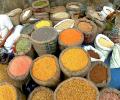
After a steady surge, prices of pulses, except those of urad and masoor to some extent, are showing signs of stabilising amid a revival of monsoon rains over major growing areas of Maharashtra and Karnataka, and on expectations of a rise in imports. Chana prices, which too had moved up in recent months, have dropped by almost 3 per cent since the end of August due to increased liquidation of government stocks, official data shows. Monsoon rains seem to have benefitted the standing soybean crop as well.

'Very few of small investors stay invested for those three or four or five years.' 'If there's like a six month, one-year period when market is not doing well, you exit.' 'After the market has run up, you get in again.' 'This way you will never make returns.'

Rain for the central and northwestern parts a concern.

Less-than-expected rainfall and a poor spatial distribution, experts say, can rekindle fears of a rise in food and fuel inflation that can have an impact on the RBI's monetary policy. The fear of less than optimal rainfall due to El Nino this year, analysts believe, is the biggest short-term risk for the markets, which they said has not been fully priced in yet by them. Monsoon set over Kerala on June 08, a week later than its scheduled date.

Moody's Investors Service on Friday raised India's growth projection for 2023 calendar year to 6.7 per cent on account of robust economic momentum. "Strong services expansion and capital expenditures propelled India's 7.8 per cent real GDP growth in the second (April-June) quarter from a year ago. "We have accordingly raised our 2023 calendar year growth forecast for India from 5.5 per cent to 6.7 per cent," Moody's said in its Global Macro Outlook. - el nino

In the coming months, globally as well as in India, rice might remain a hot potato.

Kharif sowing till June 20 almost 18 per cent less than last year; 328 districts under watch, based on rains in the first 15 days

HDFC and HDFC Bank were the biggest losers in the Sensex pack, plunging 5.09 per cent and 3.32 per cent, respectively, after the private bank reported a rise in non-performing assets.

They are worried at more than one forecast of a possibly weak monsoon, reports Dilip Kumar Jha.

It began consultations with eight states, including AP, MP, Punjab and Maharashtra, which have not got adequate rains.

The IMD has fancy weather-monitoring radars in the name of providing better forecasts.

'We are not saying we are going to face a drought... We are a doing and performing government. A contingency plan is being prepared,' Science Minister Dr Harsh Vardhan tells Rediff.com

Rajan also said the outlook for agriculture is subdued, in view of both rabi and kharif prospects being hit by monsoon vagaries.

The wide-based NSE sensitive index is currently hovering around 7,900.

Are faulty design, hurried construction and private ownership to be blamed for the incidents of airport roofs crashing?

Consensus building is likely to be the biggest casualty.

Deficient rains in west, flooding in north play havoc with crop cycles.

In 2008-09, the economy grew at 6.7 per cent despite poor farm sector growth of 0.4 per cent.

The price is at a 4-year low, stabilising around Rs 25,000/10gm.

A rate cut could stimulate demand and help revive industrial activity, without much risk of sparking off inflation again.

January inflation may undershoot RBI's 6% target.

There are high hopes that the Budget for 2014-15 to be presented in Parliament may actually not tinker with the threshold limit or the other tax slabs but could provide reliefs by incentivising savings.

RBI Governor Raghuram Rajan is expected to express that cautiousness as he looks to manage expectations.

The finance ministry on Thursday raised concerns over the possible impact of El Nio conditions on India this year, saying if recent forecasts came true, the country could see lower agricultural output and higher inflation. "Some meteorological agencies predict the return of El Nio conditions in India this year. "If these predictions are accurate, then monsoon rains could be deficient, leading to lower agricultural output and higher prices," the ministry said in its monthly economic review.
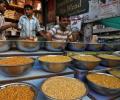
Retail tur dal prices on Monday shot up to Rs 200 per kg despite the government's steps to boost supply and check prices, aggravating consumers' woes.

Usually, turmeric is grown over 290,000-330,000 hectares of land. But in 2022-2023, according to official estimates, there has been a drop of about 10,000 hectares.

The Northern Railways said it has cancelled around 17 trains and diverted around 12 others, while traffic has been suspended at four locations due to waterlogging.

Even as cement companies continue to announce ambitious expansion plans, analysts turn cautious over the sector as incremental supply is expected to coincide with a weak demand growth period, and other headwinds of higher fuel costs, weak monsoons and general elections. In August, JSW Cement said it will take its current 19 million tonnes (MT) capacity to 60 MT in the next five years. The country's top producers have massive expansion plans underway - UltraTech Cement targeting 200 MT, Adani Cement aiming for 140 MT and Dalmia Cement planning for 110-130 MT.

The banks says that valuations are reasonable.
he 2014 electoral verdict has bolstered investor confidence and raised hopes of economic revival, apex banks says in its monthly Bulletin

Retail inflation fell to a 15-month low of 5.66 per cent in March, mainly due to a decline in food prices, government data showed on Wednesday. The inflation figure in March is within the RBI's comfort zone as it is below 6 per cent. The retail inflation based on Consumer Price Index (CPI) was 6.44 per cent in February 2023 and 6.95 per cent in the year-ago period.

According to Japanese financial services major Nomura, despite slowing external demand, the domestic growth cycle is improving.
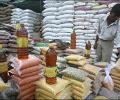
Of all the pulses, tur appears to be the most desired.

The government should frame new policies to assure growth.

RBI watchers are going to be on tenterhooks for the next 3 weeks.

Monsoon in August was almost 24 per cent below normal, which was the sixth driest August since 1901. It came on the back of a 7-per cent monsoon shortfall in July.

CPI inflation will remain below the target of 6 per cent set for January 2016.
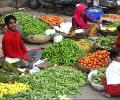
The country saw two straight years of deficient monsoons.

The country received 16 per cent more rainfall than its normal limit in June, the IMD on Tuesday said.

'The economy needs to deliver the expected 7.5% growth for the markets to deliver better than single digit returns.' 'Any disappointment in growth can see the markets correcting downwards.'
